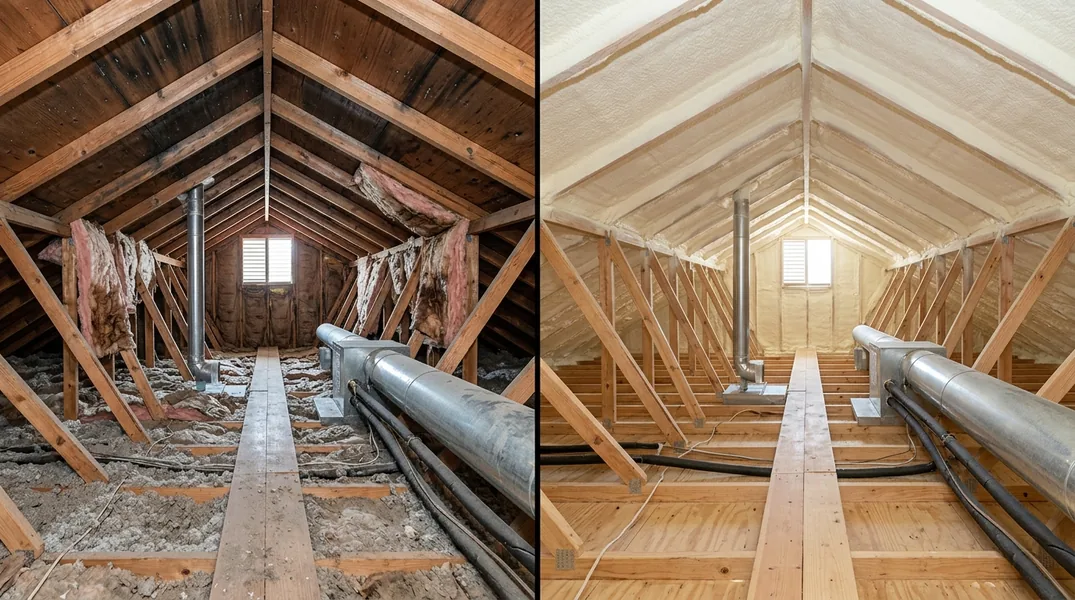
Understanding Spray Foam Insulation: Open-Cell vs Closed-Cell
When homeowners in Fort Worth consider upgrading their insulation, spray foam has become one of the most popular choices. But spray foam isn't one-size-fits-all. There are two main types: open-cell and closed-cell, and understanding the differences between them is crucial to making the right decision for your home.
Open Cell Spray Foam Insulation has a structure that allows air and moisture to pass through its cells. Think of it like a sponge with interconnected pores. Closed Cell Spray Foam Insulation, by contrast, has cells that are completely sealed off from one another, creating a denser, more rigid material. This fundamental structural difference leads to significant variations in performance, cost, and application. Both types have legitimate uses, but they excel in different situations and come with different price tags.
Open-Cell Spray Foam: Lightweight and Budget-Friendly
Open-cell spray foam is the more affordable option of the two and remains a solid choice for many homeowners. When sprayed, it expands significantly, filling gaps and cavities with a soft, compressible foam. Because it's less dense than closed-cell, it weighs considerably less and requires less material to achieve adequate coverage. This makes it an economical solution for Attic Spray Foam Insulation projects where budget is a primary concern.
One of the key characteristics of open-cell foam is that it allows water vapor to pass through. This is actually beneficial in many climates because it permits the structure to dry out if moisture gets trapped. In Fort Worth's humid summers and occasional moisture issues, this breathability can be an advantage. However, open-cell foam is not a vapor barrier, meaning it won't prevent moisture from entering in the first place. The typical R-value for open-cell spray foam ranges from R-3.5 to R-3.8 per inch, which is respectable but lower than closed-cell alternatives.
Closed-Cell Spray Foam: Maximum Performance and Protection
Closed-cell spray foam is the premium option, and for good reason. Its dense, rigid structure provides superior insulation performance and creates an effective air and moisture barrier. When sprayed, closed-cell foam expands less than open-cell but hardens into a solid, protective shell. This density makes it the go-to choice for homeowners who want the best possible thermal performance and maximum protection against air leaks and moisture infiltration.
The closed cell spray foam R value is significantly higher than open-cell, typically ranging from R-6 to R-7 per inch. This means you need less material to achieve the same insulation value, which can offset some of the higher material cost. Closed-cell foam also adds structural rigidity to your attic or walls, which can actually strengthen the building envelope. Additionally, its impermeability makes it ideal for basements, crawl spaces, or areas prone to moisture problems. For homeowners seeking maximum energy efficiency and long-term performance, closed-cell is often worth the investment.
Spray Foam R-Value Comparison: What the Numbers Mean
Understanding R-value is essential when comparing insulation options. R-value measures thermal resistance, or how well a material resists heat flow. The higher the R-value, the better the insulation. When comparing open-cell versus closed-cell, the difference in spray foam R value is substantial. Open-cell typically delivers R-3.5 to R-3.8 per inch, while closed-cell achieves R-6 to R-7 per inch. This means closed-cell is roughly twice as effective at resisting heat transfer per inch of thickness.
For attic insulation in Fort Worth's climate, this difference translates to real energy savings. If you need an R-30 attic, you'd need approximately 8 to 9 inches of open-cell foam versus just 4 to 5 inches of closed-cell foam. The closed-cell option not only performs better but also takes up less space, which can be important in attics with limited headroom. However, the choice isn't always about achieving the highest possible R-value. It's about finding the right balance between performance, cost, and your specific home's needs. A qualified contractor can help you determine the optimal R-value for your situation.
Attic Spray Foam Insulation Cost in Fort Worth: What to Budget
Cost is often the deciding factor for homeowners, and it's important to understand what you're paying for with each type. Open-cell spray foam typically costs between $0.50 and $1.50 per board foot, making it the more budget-friendly choice upfront. Closed-cell spray foam generally runs $1.50 to $3.00 per board foot or more, depending on your location and the contractor. For a typical attic project in Fort Worth, open-cell might cost $1,500 to $3,000, while closed-cell could range from $3,000 to $6,000 or higher.
However, looking only at the initial cost misses the bigger picture. Closed-cell foam's superior R-value means you may need less material to achieve your insulation goals, and its superior performance can lead to lower energy bills over time. Many homeowners find that the energy savings justify the higher upfront investment within 5 to 10 years. For a personalized estimate based on your home's size and specific needs, contact Fort Worth Spray Foam Insulation at (817) 607-8986 or request a free estimate. We'll help you understand the true cost of ownership for both options.
Which Type Is Right for Your Fort Worth Home?
The best choice between open-cell and closed-cell spray foam depends on several factors specific to your situation. If you're primarily concerned with budget and your attic doesn't have moisture issues, open-cell foam is a solid, cost-effective option that will improve your home's energy efficiency. It's also a good choice if you want to maintain some breathability in your attic structure. Conversely, if you want maximum insulation performance, have moisture concerns, or plan to stay in your home long-term, closed-cell foam's superior performance justifies the investment.
Your location within Fort Worth and your home's age and condition also matter. Older homes may benefit more from closed-cell's air-sealing properties, while newer, well-constructed homes might perform adequately with open-cell. Climate considerations are important too. Fort Worth's hot summers and occasional humidity mean that moisture management should be part of your decision-making process. The best approach is to have a professional energy audit and consultation. Fort Worth Spray Foam Insulation specializes in Wall & Injection Foam Insulation and attic applications, and our team can evaluate your home's unique needs and recommend the option that delivers the best value. Call (817) 607-8986 today to discuss your project and get a free estimate.
Looking for a professional spray foam insulation contractor in Fort Worth? Fort Worth Spray Foam Insulation responds fast for all your spray foam insulation needs.
Get a Free Quote