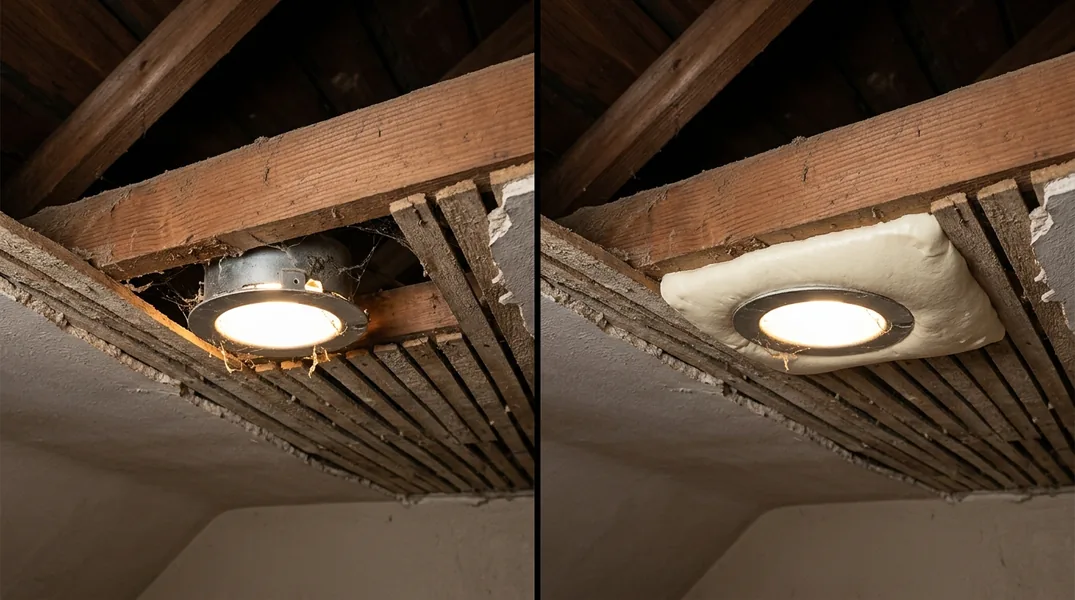
Understanding the Core Difference: Spray Foam vs Blown-In Insulation
When homeowners in Fort Worth start researching attic insulation upgrades, they quickly encounter two dominant options: spray foam and blown-in insulation. While both serve the same basic purpose, they work in fundamentally different ways, and understanding those differences is the first step toward making a decision that actually fits your home and budget.
Attic Spray Foam Insulation expands as it's applied, creating a seamless, air-tight barrier that adheres directly to rafters, joists, and other surfaces. Blown-in insulation, by contrast, consists of loose fibers (fiberglass, cellulose, or mineral wool) that are pneumatically installed into cavities and settle over time. The spray foam approach creates an immediate seal; blown-in relies on density and coverage to minimize air leakage. Neither is inherently "wrong," but they solve problems differently, and that matters when you're deciding what's right for your attic.
Spray Foam vs Fiberglass: The Energy Sealing Question
Fiberglass batts and blown-in fiberglass are among the most common insulation types in older Fort Worth homes. They're affordable, familiar, and reasonably effective when installed correctly. However, fiberglass is a passive insulator: it slows heat transfer through the material itself, but it doesn't seal air leaks. If your attic has gaps around penetrations, poorly sealed ductwork, or irregular joist spacing, fiberglass alone won't address those energy losses.
Closed Cell Spray Foam Insulation offers a higher R-value per inch and, more importantly, it seals as it expands. This dual benefit makes spray foam particularly valuable in older homes where air tightness is compromised. For homeowners tired of high summer cooling bills or inconsistent indoor temperatures, spray foam's air-sealing capability often justifies the premium cost. That said, if your fiberglass is in good condition and your primary concern is adding more insulation depth, a blown-in top-up might deliver 80% of the benefit at a fraction of the cost.
Spray Foam vs Cellulose: Which Blown-In Option Makes Sense
Cellulose has gained popularity as an eco-friendly blown-in option, and it does offer advantages over fiberglass in some scenarios. It has a slightly higher R-value per inch, settles less over time, and can be treated with fire retardants. When comparing spray foam vs cellulose, the key trade-off emerges: cellulose is cheaper upfront but doesn't seal air leaks the way spray foam does. It's also more susceptible to moisture issues in humid climates, which is relevant in the Texas summer.
For homeowners in Fort Worth with existing blown-in cellulose that's settled or compacted, adding more cellulose is often the most economical path forward. However, if your attic has visible air leaks, moisture concerns, or you're planning a long-term stay in your home, investing in Open Cell Spray Foam Insulation may deliver better performance and peace of mind over 20 plus years.
Best Insulation for Attic: When a Top-Up Is the Honest Answer
Here's where we get honest. Not every attic needs a complete re-insulation or a premium spray foam retrofit. If your existing insulation is intact, properly distributed, and your main concern is insufficient R-value, a simple blown-in top-up is often the best insulation for attic improvement. Adding 4 to 6 inches of blown-in fiberglass or cellulose over existing material is fast, non-invasive, and effective. Your energy bills will drop, and you'll stay within a reasonable budget.
The case for spray foam strengthens when you have documented air leaks, moisture problems, or if you're addressing specific problem areas like cathedral ceilings or rim joists (where Wall & Injection Foam Insulation techniques apply). Spray foam also makes sense if you're planning major renovations and the attic is already open. But if your existing insulation is sound and your primary goal is adding depth, recommending expensive spray foam would be overselling the solution. Fort Worth Spray Foam Insulation believes in recommending what actually solves your problem, not the most expensive option.
Attic Spray Foam Insulation Cost in Fort Worth: What to Budget
Spray foam typically costs two to three times more per square foot than blown-in insulation, and that premium reflects the material, equipment, and specialized labor involved. Pricing for a full attic spray foam retrofit in Fort Worth generally ranges from $1,200 to $3,500 for an average 1,200 square foot attic, depending on whether you choose closed-cell or open-cell and the complexity of your space. Blown-in insulation top-ups, by contrast, often cost $300 to $800 for the same area.
That cost difference is real, and it matters. If your budget is tight and your insulation isn't failing, a blown-in top-up delivers measurable energy savings without breaking the bank. If you have the budget and want maximum air sealing, moisture resistance, and long-term durability, spray foam is worth the investment. The key is understanding what problem you're solving. Contact Fort Worth Spray Foam Insulation at (817) 607-8986 or request a free estimate so we can assess your specific situation and recommend the solution that matches your needs and budget, not just the highest price tag.
Making Your Decision: Questions to Ask Before You Choose
Before committing to any insulation upgrade, ask yourself a few practical questions. Is your current insulation wet, compacted, or visibly damaged? Are you experiencing temperature swings or high energy bills? Do you have air leaks visible around electrical penetrations, ductwork, or eaves? Are you planning to stay in your home for ten years or more? If you answered yes to the first, second, or third question, spray foam becomes more attractive. If you answered yes mainly to the fourth, blown-in makes financial sense.
Also consider your attic's accessibility and current condition. Spray foam installation requires specialized equipment and trained technicians, so quality varies by contractor. Blown-in insulation is more forgiving and easier to verify. Neither approach is universally "best," which is why an honest assessment from a local professional matters. If you're in Fort Worth and ready to move forward, reach out to Fort Worth Spray Foam Insulation at (817) 607-8986 to discuss your attic, your budget, and the real solution that fits both.
Looking for a professional spray foam insulation contractor in Fort Worth? Fort Worth Spray Foam Insulation responds fast for all your spray foam insulation needs.
Get a Free Quote